The NAVIOM AV-110 receiver: understanding −101 dBm and 70 dB
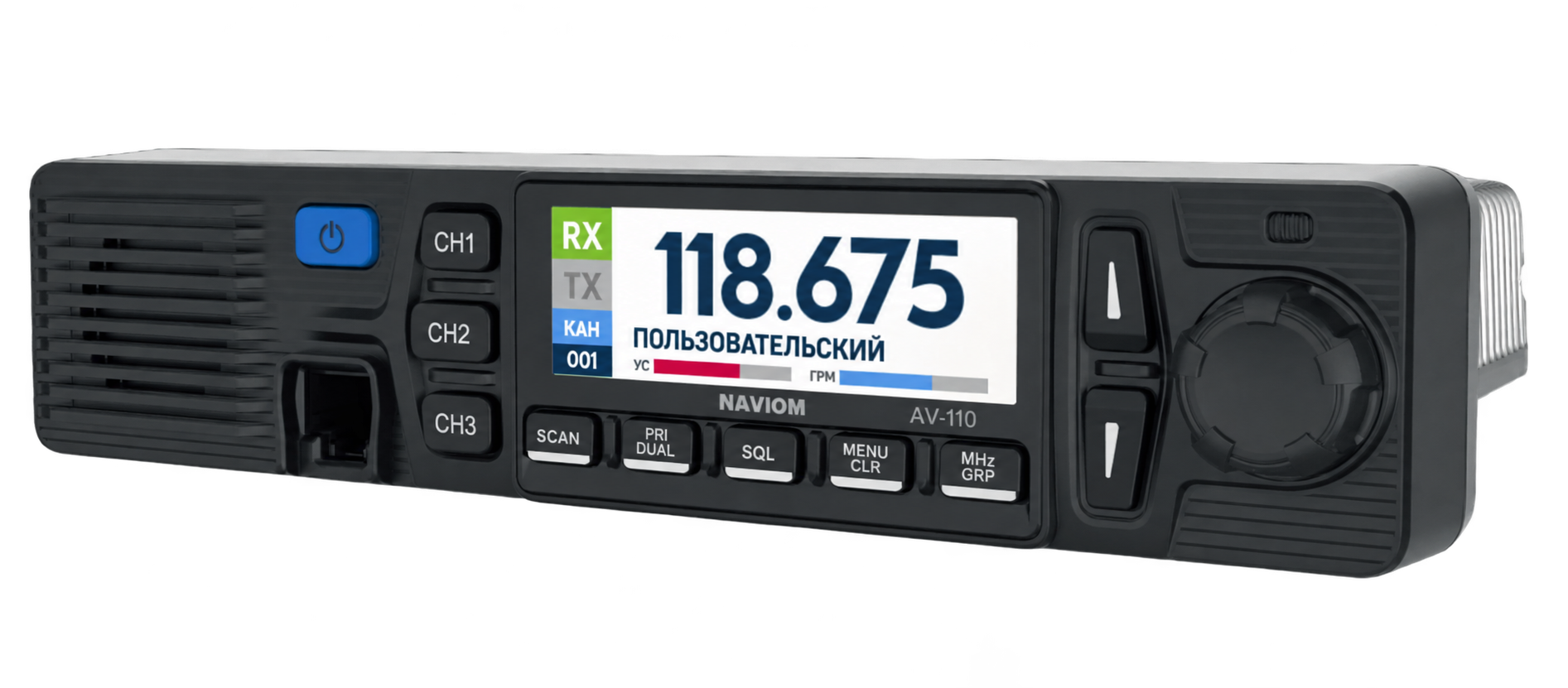
Transmitter power is only part of an aviation radio’s specification. At a ground position where the operator mainly listens to messages, the receiver deserves separate attention. The NAVIOM AV-110 sheet lists sensitivity, adjacent-channel selectivity and audio output. These lines describe different properties and have measurement conditions that must be retained when comparing equipment for the same operating task.
Sensitivity: a number and its criterion
The AV-110 specifies −101 dBm or better at 12 dB SINAD using CCITT. Compare this with another radio only where the measurement criterion is comparable. A bare “−101” without units and conditions cannot support a useful conclusion. Nor does the figure describe a complete installation: the antenna path and site conditions remain separate parts of the task, even if two devices have the same stated sensitivity.
Adjacent-channel selectivity: retain the spacing
The sheet gives selectivity of at least 70 dB for 25 kHz channel spacing. The AV-110 supports both 25 and 8.33 kHz spacing, but the stated value cannot be transferred to the second spacing without additional data. Include a separate conditions column in a comparison table. This prevents similar-looking figures from becoming promises of identical behaviour under every setting and makes questions to the supplier more precise.
Reception and audio volume are different
Audio output into a nominal 4-ohm external loudspeaker is at least 10 W at a 13.75 V DC supply. This describes the audio path rather than receiver sensitivity. A loud speaker and adaptive volume are also listed. Assess their usefulness from the operator’s normal position with typical background noise present. A high audio wattage does not replace a correctly connected antenna or describe RF signal quality by itself.
Compare complete operating positions
The AV-110 covers 118.000–136.99166 MHz, connects to a 50-ohm antenna system through an SO-239 socket and uses 12 or 24 V DC. State the required channels, listening conditions and proposed antenna in the enquiry. When comparing alternatives, ask for units and conditions to be retained for every specification. This is more useful than ranking one number: the operator needs a clear result from the whole installation, not an isolated specification line.
Questions and answers
Does the 70 dB rating cover both spacings?
The supplied sheet attaches it to 25 kHz spacing. It provides no basis for transferring that number to 8.33 kHz.
Is the AV-110 a TETRA radio?
No. This is a VHF aviation model covering 118.000–136.99166 MHz; the site’s other subjects do not change the equipment’s purpose.
Availability,delivery time and package contents are confirmed with your enquiry.